You are in the store aisle, or scrolling with a cart open, and one massage gun is $21.99 while another is $429.99. Both buzz against a sore muscle. Before you pay for the gap, here is what the extra money actually buys, and what it doesn't.
The short version
- Most people need a light gun with a few speeds, a ball and a flat head attachment, and a battery that lasts about 120 minutes.
- That typically costs around $21.99 to $89.99.
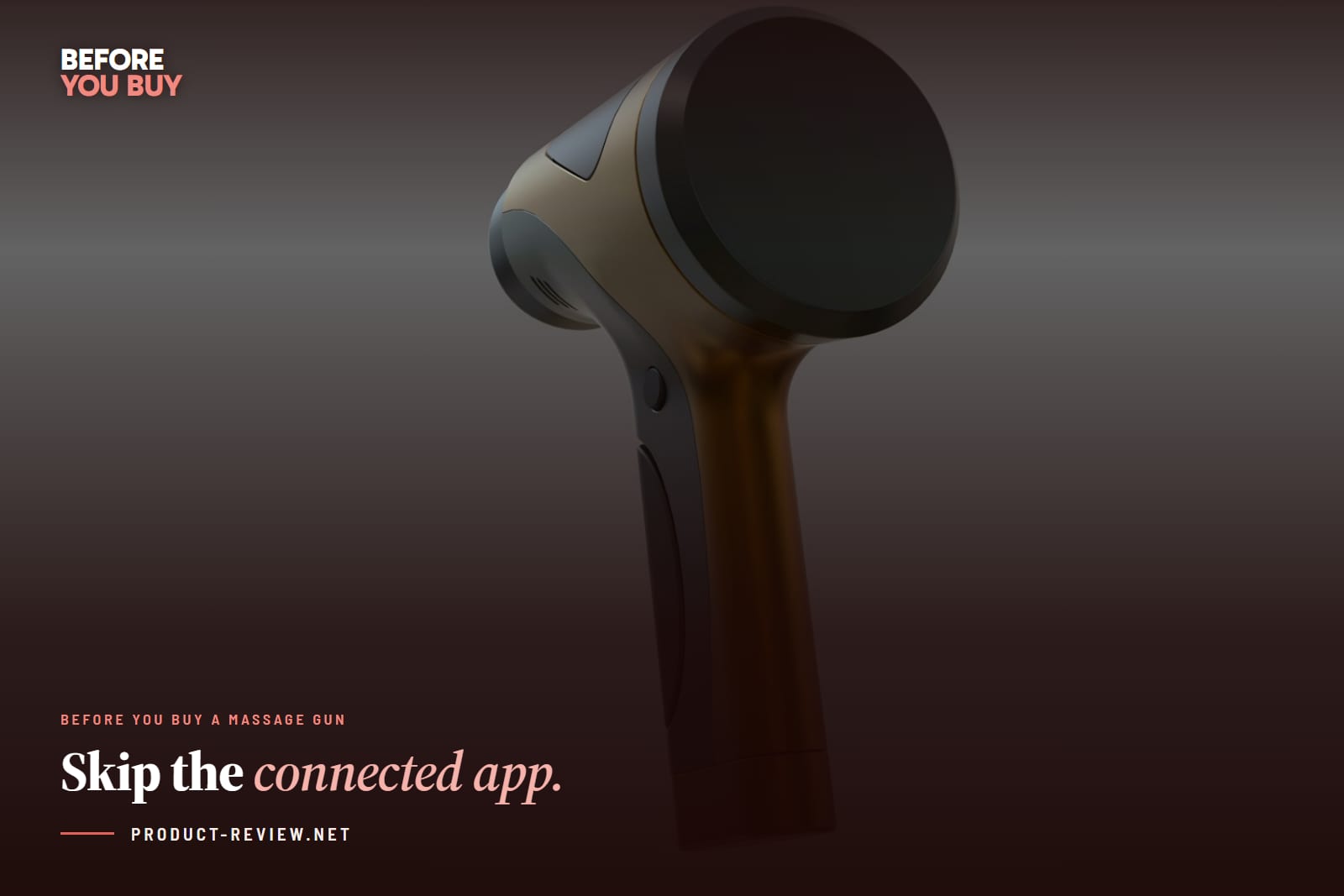
- Skip the connected app. It adds to the price, not to how well the gun works on a tight calf.
Which kind fits you
If you will carry it in a gym bag or on trips, a mini is the easy fit. Some minis weigh just 0.45 kg and have a travel lock, so the head can't switch on in your bag. A full size gun is easier on big areas like thighs and glutes, and makers describe a wedge shaped head as suited to large muscles such as the quadriceps and IT bands.
If your lower back is the problem, reach matters. Some budget guns have an extended handle made for that. Weight matters too. Heavier guns, such as a full size one at 2.6 lb, can be hard to use on yourself, because you have to hold the weight out at arm's length. If you will mostly work on your own body, hold the gun in the store and check that you can reach where it hurts.
Features to look for
Stroke depth is how far the head travels in and out. It is listed in millimeters. Budget guns list about 10mm to 12mm, and pricier ones go to 14mm or 16mm. Deeper is not automatically better, because a very deep stroke can be too much for tired or weaker muscles.
Push strength is how much pressure the motor handles before it slows down. Listed figures run from up to 25 lbs on a budget gun to up to 70 lbs on a premium one. For general soreness, the lower end is enough.
Battery is easy to read. About 120 minutes is common, and some models go to three or four hours. Also check the noise, since some cheaper guns are loud, and check the weight, since that decides how long you can comfortably hold it.
Upgrades worth paying for
- A pressure sensor, which some mid priced guns add, is worth it if you tend to press too hard or you are new to this. It guides how firm you go.
- A longer battery, up to four hours on some models, is worth it for a shared gun or frequent travel.
- A travel case suits anyone who packs it. Some guns include one and some don't, so check the box.
- A longer warranty helps if you want to buy once. One name brand gun lists a 1 year limited warranty, so compare that line between models.
- Higher push strength and a deeper stroke are worth it only for big, dense muscles and heavy training.
What you can skip
- The built-in screen showing speed and force. A plain speed button does the same everyday job.
- A long list of speeds. A mini with three speeds covers most needs, and others offer five or six.
- A huge attachment set. One budget gun comes with eight, but most people stick to a ball and a flat head.
- The highest speed numbers. Compare them to your own comfort, not to a chart.
- Bluetooth and app features, if the short version didn't already convince you. A gun without one still does the whole job.
What you get for the money
Around $21.99 to $89.99 gets you a basic gun. Expect stroke depth of about 10mm to 12mm, up to 25 lbs of push strength, around five speeds and, on some, as many as eight attachments. You may also get an extended handle for your back. The trade is more noise and fewer extras like a carry case. For everyday soreness, this tier is plenty.
Around $139 to $229 gets you name brand minis and entry full size guns. This is where you start seeing warranties and travel friendly designs. App connection is a split point in this range. One gun at $139 goes without it, while another at $229 adds a Bluetooth app.
Around $349 to $429.99 gets you premium. Here you will find a stroke depth up to 16mm, up to 70 lbs of push strength, battery of about 180 minutes, screens, sensors and apps. These suit serious athletes who train hard more than casual users.
Before you buy checklist
Quick answers
How much should I spend on a massage gun?
For everyday soreness, around $21.99 to $89.99 is enough. Premium models start at $349 and add features most people won't use.
Do I need a deep stroke or a high push strength?
Not for general soreness. Budget guns list about 10mm of stroke and 25 lbs of push strength, while premium ones reach 16mm and up to 70 lbs.
Is a massage gun with an app worth it?
Usually not. One gun at $139 comes without an app, and another at $229 adds a Bluetooth app.
Sources
- Theragun Prime | Certified Refurbished | Deep Percussion Massage for Better Recovery | Therabody US
- Theragun Elite | Certified Refurbished | Powerful Percussion Massage for Deep Muscle Relief | Therabody US
- Mini 3rd Generation – Therabody TW
- Theragun vs Hypervolt: Which is best? | Live Science
- Theragun Mini Versus Hypervolt Go
- Hyperice’s new recovery gadgets promise more power than Theragun for less money | T3
- The Best Budget Massage Guns for Cheap, Effective Recovery | Gear Patrol
- Hyperice Hypervolt 2 Pro review | Tom's Guide