You're standing in front of a $99 mixer and a $799 one. Both have a bowl, a beater and a motor, and the shelf tags are doing all the talking. You tip one head back, heave one box an inch off the shelf, and wonder whether the extra money buys better cookies or just a heavier machine. For many home bakers, it buys less than the price gap suggests.
The short version
- Most home bakers need a tilt-head mixer with a bowl of about 4.5 to 5 quarts, enough for cakes, cookies and the occasional loaf.
- That kind of mixer typically costs about $99 to $429, depending on weight, motor power and what comes in the box.
- The one thing to skip is paying extra for a long list of colors.
Which kind fits you
Start with what you bake. Heavy bread, cookie and pastry baking calls for a sturdier mixer, and a sturdier mixer usually costs more, as chefs quoted by Today point out.
A tilt-head is the kind where the top tips back so you can reach the bowl. It suits beginners and anyone who bakes now and then. A tilt-head of one popular make is 14 inches tall, so it fits under most cabinets.
A bowl-lift cranks the bowl up and down. It's built for larger, heavier mixes and has a broader base for stability, but at 16.5 inches tall in the same line, it needs more headroom. According to Tom's Guide, it's only for serious bakers who regularly make bread and large batches.
Features to look for
Weight. A light mixer can slide around the counter when it works stiff bread dough. Bigger mixers are usually heavier too, so measure your counter and storage space before you buy.
Motor power. Bread and pizza dough are tough, so they need a stronger motor. A 350-watt motor in a mixer of about 10 pounds handles cookies and light doughs, but it isn't meant for bread.
Bowl size. If you bake bread a few times a week or for a crowd, look for a bowl of at least 4.6L, according to Kenwood.
Metal parts. Avoid plastic attachment parts, because they can break on sturdier dough.
The basics in the box. A beater, a whisk and a dough tool cover most baking, so check all three come with it.
Upgrades worth paying for
A bowl-lift is worth it for people who bake bread often or mix large batches. A 7-quart bowl-lift can handle up to 8.5 lbs of bread dough.
A stronger motor is worth it for anyone who kneads bread or pizza dough every week. Cake and cookie bakers don't need it.
A bowl of at least 4.6L is worth it for people who bake bread a few times a week or for a crowd.
Extra attachment uses, like grinding or pasta rolling, are worth it for people who already plan to grind or roll pasta at home. If you mostly make muffins, cakes and small pastries, basic attachments are enough.
What you can skip
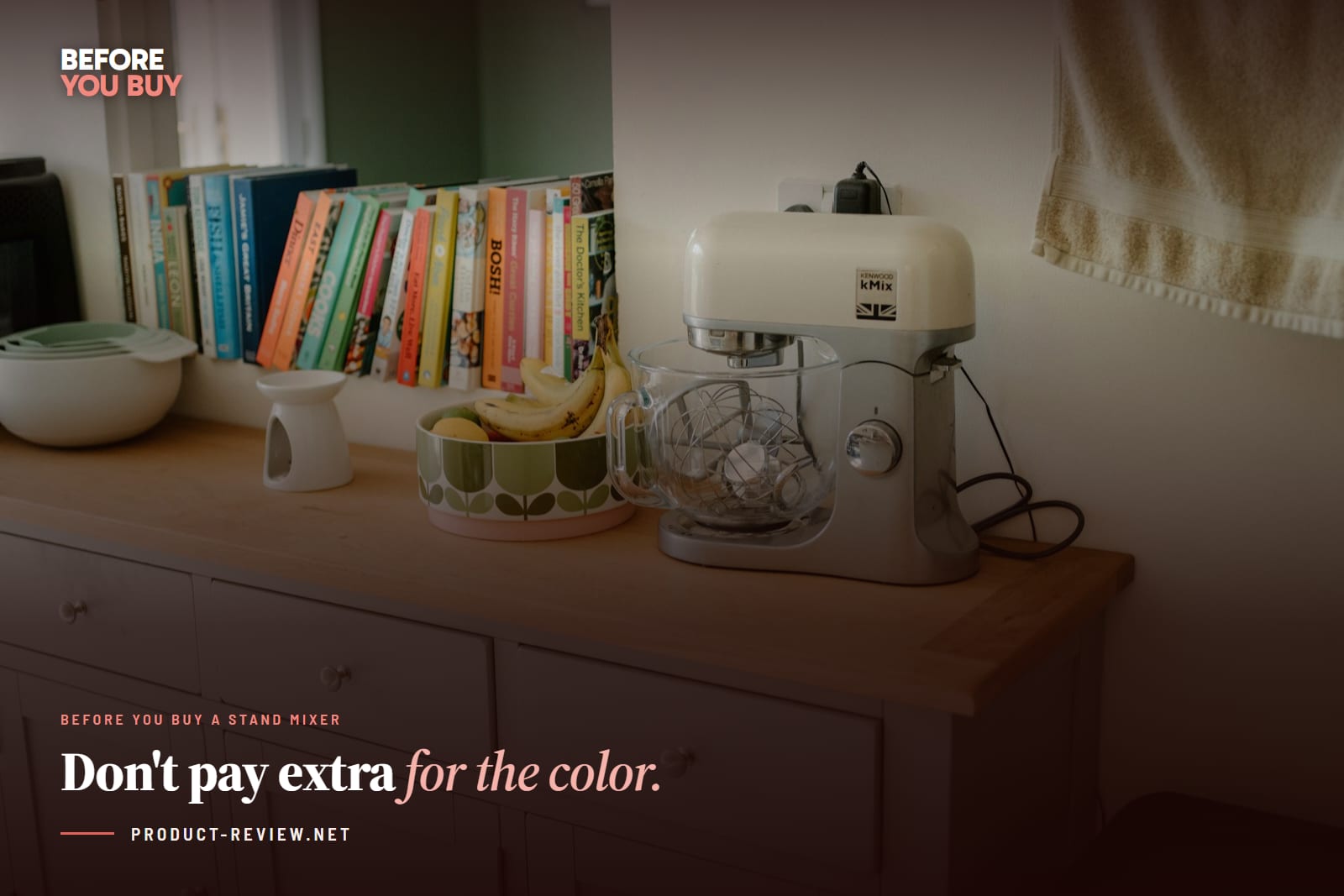
A long color list. Color has no effect on how the mixer works, and the cheaper model in one line comes in two colors against 39 for the pricier one.
A bowl material that needs extra care. A walnut bowl, for example, is one a reviewer suggests for hobbyists, not for everyday baking.
Specialist functions such as dough proving or presets for meringue or melting chocolate. Only some models offer them, and the beater, whisk and dough tool already cover everyday baking.
A high speed count. Models run from six speeds to 12, and plain cookie and cake baking doesn't depend on the number.
A bowl-lift, if you bake only now and then. A tilt-head suits occasional bakers and beginners.
What you get for the money
Around $99 to $250 gets you a basic mixer. Expect a lighter body of about 10 pounds, a motor of 300 to 350 watts, a bowl of roughly 5 to 6.5 quarts, three standard attachments and anywhere from six to 12 speeds. It's built for cookies and light doughs rather than regular bread.
Around $250 to $429 gets you a sturdier tilt-head with a 4.5 to 5 quart bowl. It's the all-round choice for cakes, cookies and the odd loaf. The upper end of this range adds a larger bowl, more power and a pouring shield.
Around $429 to $599 gets you more attachments or a bowl-lift. That means a 5-quart tilt-head with four attachments, or a 7-quart bowl-lift that handles heavy bread dough and comes with a flex-edge beater and pouring shield.
Around $599 to $799 gets you bowls of 7 to 7.5 quarts and, on one example, a body of 41.5 pounds. It suits people who bake large batches of stiff dough.
A mixer meant to last is probably at least a few hundred dollars, according to a pro quoted by Today.
Before you buy checklist
Quick answers
Do I need a bowl-lift mixer for home baking?
Usually not. Only serious bakers who regularly make bread and large batches need one, and a tilt-head suits home bakers and beginners.
How much should I spend on a stand mixer?
Basic models for cookies and light doughs start around $99, and a sturdier all-round tilt-head runs up to about $429. A mixer built to last is probably at least a few hundred dollars.
What bowl size do I need?
For bread a few times a week or for a crowd, look for at least 4.6L. For cakes and cookies, a bowl of about 4.5 to 5 quarts is typical.